TL;DR
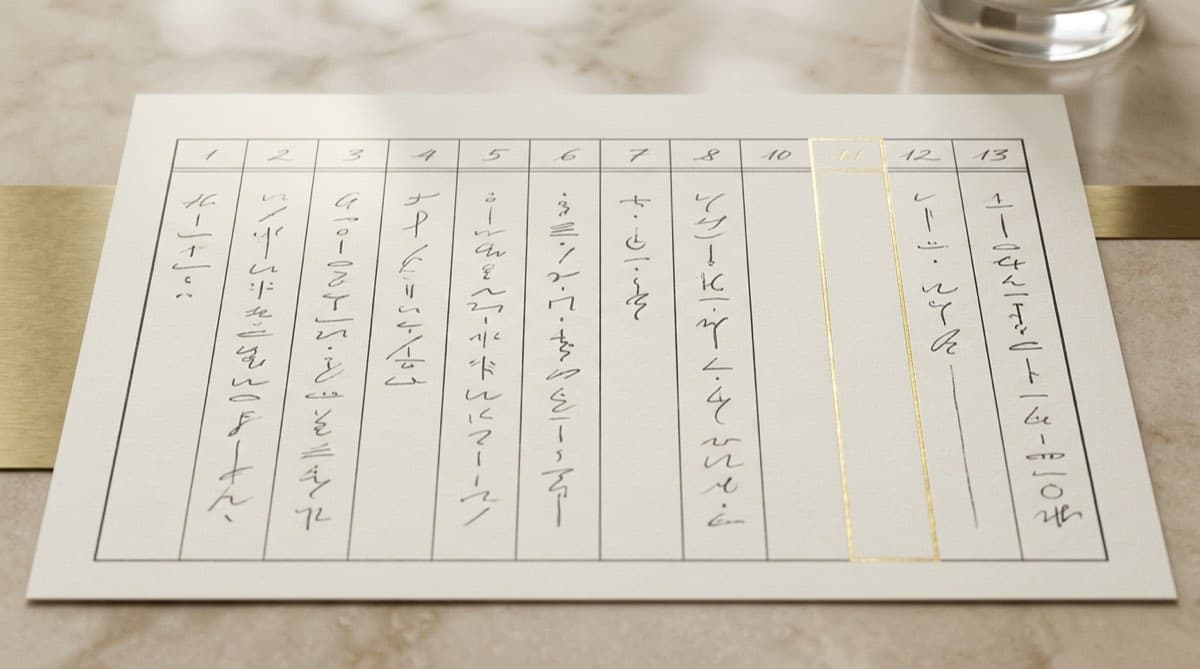
- A Karnataka RTC (Pahani) is a 13-column government record of a revenue land parcel; Column 9 lists the owners (names, share extents, khata number) and Column 11 records loans, mortgages and court charges on that parcel — so reading Column 11 is your first-line encumbrance check before you trust any RTC.
- The RTC is a record of rights and a fiscal/crop record — it is not conclusive proof of title. A clean Column 11 lowers risk; it does not, by itself, confirm marketable title.
- Column 11 can be blank yet the land still be mortgaged: Bhoomi only shows charges that were reported back to the village accountant. The authoritative encumbrance picture comes from a Kaveri Encumbrance Certificate and a CERSAI check, cross-read against the RTC.
- Match the mutation (MR) numbers behind Column 9 to registered deeds and the EC; an owner name that appears with no traceable mutation is a red flag.
- Always pull a current, digitally signed RTC from the official Bhoomi portal — a stale or unsigned printout is the most common avoidable mistake.
What is a Bhoomi RTC (Pahani) and what does it actually prove?
An RTC — Record of Rights, Tenancy and Crops, known locally as the Pahani — is the core land record for revenue (rural/agricultural) land in Karnataka, maintained digitally on the state's Bhoomi system. It packs ownership, land classification, encumbrances, tenancy and crop history into a single tabular document of (canonically) 13 columns.
Here is the myth-buster that catches buyers out: the RTC is not a title deed and it is not conclusive proof of ownership. It is a record of rights and a fiscal/crop record — evidence of who the revenue department believes is in possession and what charges have been reported, prepared primarily for land revenue and cultivation purposes. Title in India is created and transferred by registered instruments under the Registration Act 1908 and the Transfer of Property Act 1882, not by an RTC entry. Courts treat RTC mutation entries as presumptive and rebuttable, never as a final word on ownership.
So the right mental model is: the RTC is the index and first filter. It tells you where to look, whose name to chase through the deed chain, and whether the parcel is flagged with a loan or dispute. It is the opening move of land diligence, not the conclusion — which is why it sits inside the Land pillar of a full title search report rather than standing alone.

What do the 13 columns of an RTC mean?
At a high level the RTC groups its columns into four buckets: parcel geography, ownership and charges, tenancy, and cultivation/crop statistics. The two columns that decide most diligence questions are Column 9 (who owns it) and Column 11 (what is charged against it).
| Group | Columns (typical) | What they record | Why it matters |
|---|---|---|---|
| Parcel geography | Survey/hissa number, total extent, sub-divisions | The parcel's identity and size | Confirms you are looking at the right land and the correct area |
| Land classification | Land type (dry/wet/garden), soil/assessment, water source | How the land is classed for revenue | Affects valuation; flags wet-land/irrigation status |
| Ownership | Column 9 | Owner name(s), extent of each share, khata number | The legal-owner question — must match the deed chain |
| Acquisition / mutation | Linked mutation (MR) references | How each owner acquired the share | Lets you trace each name back to a registered transaction |
| Encumbrances & liabilities | Column 11 | Bank loans, mortgages, court charges/attachments on the parcel | First-line encumbrance and litigation flag |
| Tenancy | Column 12 | Tenant details, if any | Possession by someone other than the owner |
| Cultivation & crops | Column 13 | Year/season, crops grown, area cultivated, yield, irrigation | Crop loan history, actual use, irrigation reality |
A note on numbering: simplified RTC printouts and some portal layouts collapse or re-order columns, so the exact column index can vary slightly by format and year. What does not vary is the substance: there is an ownership column (Col. 9) and a separate encumbrance/charges column (Col. 11). Read by meaning, not by counting boxes.
Column 9 — the ownership column
Column 9 names the recorded owner(s), the extent of each person's share (this is where you spot fractional/joint ownership and undivided shares), and the khata number. Every name here should be explainable by a mutation entry that traces back to a registered deed, a court decree, or an inheritance. Read this column alongside the mutation register (MR) and your registered sale-deed chain — if a name appears in Column 9 that you cannot tie to any registered transaction, treat it as a defect until proven otherwise. For the full workflow of pulling and reading these records, see our guide to Bhoomi RTC for land acquisition.
Column 11 — the encumbrance column (the one almost no one reads properly)
Column 11 is the RTC's liabilities ledger. It records charges noted against the parcel: agricultural and crop loans, bank mortgages, and court orders, charges or attachments affecting the land. A live entry here is an immediate flag — it means money is owed against, or a dispute is attached to, the very land you are diligencing.
When you read Column 11, work through:
- Is there any entry at all? A non-blank Column 11 means a reported charge — read it in full.
- Who is the charge-holder? Usually a bank/co-operative society (loan) or a court (attachment/order).
- Is it discharged or live? A loan that was repaid should show a corresponding release/closure entry. An open loan with no release is a live mortgage.
- Does it reconcile with the EC and CERSAI? A charge in Column 11 should also appear in the Kaveri Encumbrance Certificate and/or the CERSAI registry — and vice versa. Mismatches are the real story.
How do I read an RTC step by step?
Here is a practical reading order that mirrors how a diligence team works through a parcel.
- Pull a fresh, digitally signed RTC from the official Bhoomi portal (
landrecords.karnataka.gov.in) for the exact survey number and hissa. Reject any printout that is not current or not signed. - Confirm parcel identity and extent against your agreement — survey number, hissa, sub-division, and total area.
- Read Column 9 (ownership) — list every owner and their share. Note joint owners, minors, and undivided shares.
- Trace each owner via the mutation (MR) entries back to a registered deed, decree or inheritance.
- Read Column 11 (encumbrances) — log every loan, mortgage and court charge, and whether each is live or released.
- Read the tenancy (Col. 12) and crop columns (Col. 13) — a tenant in possession or a crop loan you didn't expect can complicate vacant-possession and encumbrance assumptions.
- Cross-verify externally — match Column 11 against a Kaveri Online Encumbrance Certificate and a CERSAI search; match Column 9 against the registered deed chain.
Deedwise automates exactly this loop for revenue land: it fetches the signed RTC and the mutation history from Bhoomi, translates the Kannada entries, and reconciles Column 11 against the Kaveri EC and CERSAI — then a lawyer reviews and signs the result. The AI gathers and drafts; a human lawyer makes the call.
What a clean Column 11 still cannot tell you
This is the honest limit that protects you. A blank or clean Column 11 does not mean the land is unencumbered. The RTC only reflects charges that were reported back to the village accountant and entered in Bhoomi. Specifically, Column 11 can miss:
- Mortgages by deposit of title deeds (equitable mortgages) that were registered with a sub-registrar or filed with CERSAI but never communicated to the revenue office — these surface in the Kaveri EC / CERSAI, not necessarily on the RTC.
- Recent transactions and very fresh charges not yet mutated into Bhoomi (there is always a lag between registration and RTC update).
- Litigation that hasn't produced a court attachment order sent to the village accountant — active suits can be pending in eCourts with nothing on the RTC.
- The validity of title itself — the RTC shows possession and reported charges, not whether the underlying deeds are genuine, properly stamped, or free of prior-owner defects.
That is why the RTC is the first encumbrance check, never the only one. The authoritative encumbrance picture comes from the Kaveri EC plus CERSAI, and litigation from eCourts and the relevant courts — all cross-read against the RTC. (Several of the classic title defects in Indian real estate, like an undischarged equitable mortgage or a misrepresented agriculturist status, are precisely the ones a lone RTC will not reveal.)
What are the Column 11 and RTC red flags to watch for?
Lead with the problem, then how it hides, then how a diligence team catches it.
| Red flag | How it hides | How to catch it |
|---|---|---|
| Live mortgage/loan in Column 11 | Owner says "that loan is closed" but no release entry exists | Insist on the bank's release/no-dues; confirm the discharge is mutated; cross-check CERSAI |
| Court charge / attachment in Column 11 | Treated as "old matter, settled" | Pull the case in eCourts/relevant court; get the disposal/vacating order, not just an assurance |
| Column 11 blank but EC/CERSAI shows a charge | Equitable mortgage never reported to the village accountant | Always run Kaveri EC + CERSAI alongside the RTC; trust the registry over a blank column |
| Owner in Column 9 with no traceable mutation | A name "just appears" in the record | Demand the mutation (MR) and the registered deed/decree behind it |
| Fractional/undivided shares in Column 9 | Single seller signs for the whole parcel | Identify every co-owner; require all of them (or a partition) before purchase |
| Tenant in Column 12 | Vacant-possession assumed | Verify possession on the ground and the tenant's rights |
| Stale or unsigned RTC | An old printout looks identical to a fresh one | Pull a current digitally signed copy yourself from Bhoomi for the deal |
| Land-use / classification mismatch | "Agricultural" land assumed buildable | Check land type and whether DC conversion is needed for non-agricultural use |
One context point worth knowing: Karnataka repealed Sections 79A, 79B and 79C of the Karnataka Land Reforms Act 1961 via a 2020 amendment — so the old bar on non-agriculturists or high-income buyers acquiring agricultural land no longer applies the way it once did. That removes one historic class of objection, but it does not dilute any of the RTC red flags above; ownership, encumbrance and litigation checks are unchanged. Fold this into your wider property due-diligence checklist rather than treating it as a green light.
Frequently asked questions
What is recorded in Column 11 of a Karnataka RTC? Column 11 records the liabilities and charges noted against the land parcel — agricultural/crop loans, bank mortgages, and court orders, charges or attachments. A live entry signals money owed against the land or a dispute attached to it, making Column 11 the first-line encumbrance and litigation flag when you read an RTC.
Which column of the RTC shows the owner? Column 9 is the ownership column. It lists the recorded owner(s), the extent of each person's share (which reveals joint or undivided ownership), and the khata number. Every name in Column 9 should be traceable through the mutation register back to a registered deed, decree or inheritance.
Is a clean Column 11 enough to confirm the land has no loans? No. Column 11 only reflects charges that were reported to the village accountant and entered in Bhoomi. Equitable mortgages by deposit of title deeds, very recent charges, and undischarged loans filed with CERSAI or registered with the sub-registrar may not appear. Always cross-check Column 11 against a Kaveri Encumbrance Certificate and a CERSAI search before concluding the land is unencumbered.
Is an RTC (Pahani) proof of ownership or title? No. The RTC is a record of rights and a fiscal/crop record, not a title deed. It is presumptive, rebuttable evidence of possession and reported charges. Marketable title in India is established by registered instruments under the Registration Act 1908 and the Transfer of Property Act 1882, traced through the deed chain — not by an RTC entry.
How do I get a valid RTC to read? Download a current, digitally signed RTC from Karnataka's official Bhoomi portal (landrecords.karnataka.gov.in) for the exact survey number and hissa, or obtain a signed copy from the village accountant. Avoid relying on an old or unsigned printout the seller provides — pull a fresh copy yourself for the transaction.
What is the difference between Column 9 and Column 11? Column 9 answers "who owns it" — owner names, share extents and khata number. Column 11 answers "what is charged against it" — loans, mortgages and court charges on the parcel. Read together, they tell you whether the seller can actually convey clean title: the right owner (Col. 9) over unencumbered land (Col. 11), each verified against external registries.
Continue reading
Can a Non-Farmer Buy Agricultural Land in Karnataka in 2026? (79A/79B Repeal Explained)
8 min read
Is e-Khata Mandatory in Bangalore? How to Get and Verify e-Khata on e-Aasthi (2026)
11 min read
How to Verify DC Conversion of Agricultural Land in Karnataka (and Spot a Fake Order)
10 min read

Bhoomi RTC for Karnataka Land Acquisition: A Developer's Guide
11 min read
Automate your due diligence
Skip the manual portal work.
Deedwise automates everything in this article — across every connected portal — and delivers a complete Title Search Report in hours.
Request Access